
With my first year of scapes I am trying all sorts of recipes. The one I think I am most excited for is this one, garlic scape mustard. I’ve always wanted to try making mustard so I found a few recipes, and as usual, mixed a few together and added some of my own ingredients, to come up with the recipe below. I have included a few notes that as a beginner I had no idea of, but learned as I went through the process.
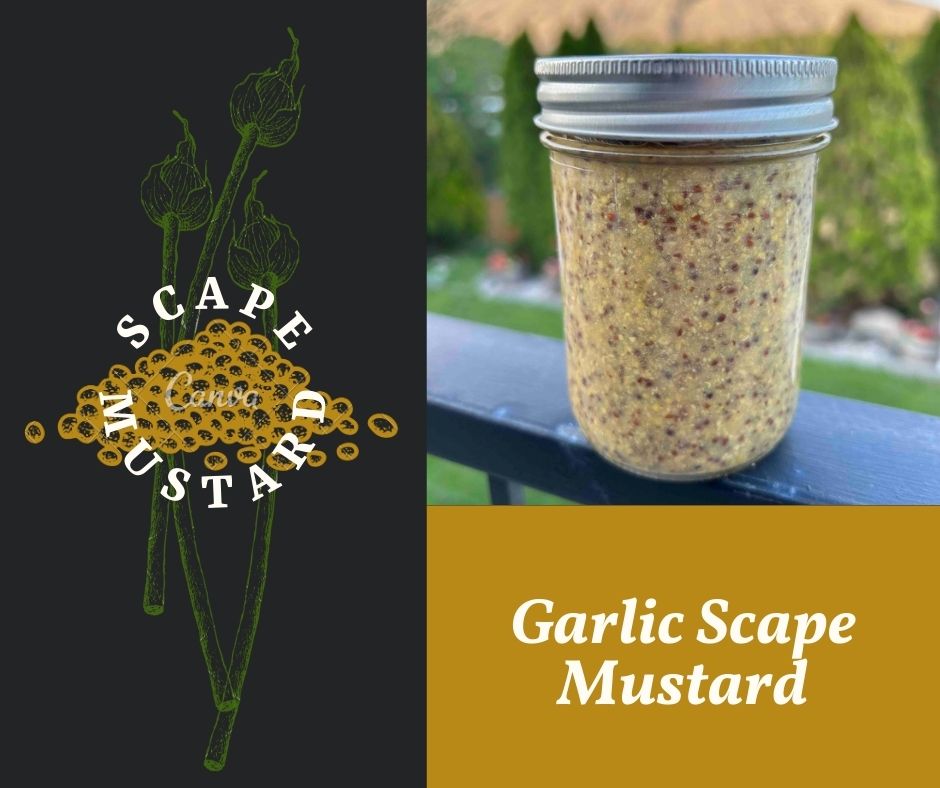
Ingredients
- 2 cups water
- 1 cup cider vinegar
- 1/2 cup yellow mustard seeds
- 1/4 cup brown or black mustard seeds
- 1/3 cup dry mustard
- 3/4 cup chopped garlic scape
- 1/4 cup sugar
- 1/4 cup honey (can replace this with sugar if you prefer not to use honey)
- 1-1/2 tsp salt
- Fresh ground pepper
- 1/2 tsp turmeric
Directions
- Chop the garlic scapes into smaller chunks. You will be blending them later so they don’t have to be uniform, just small.
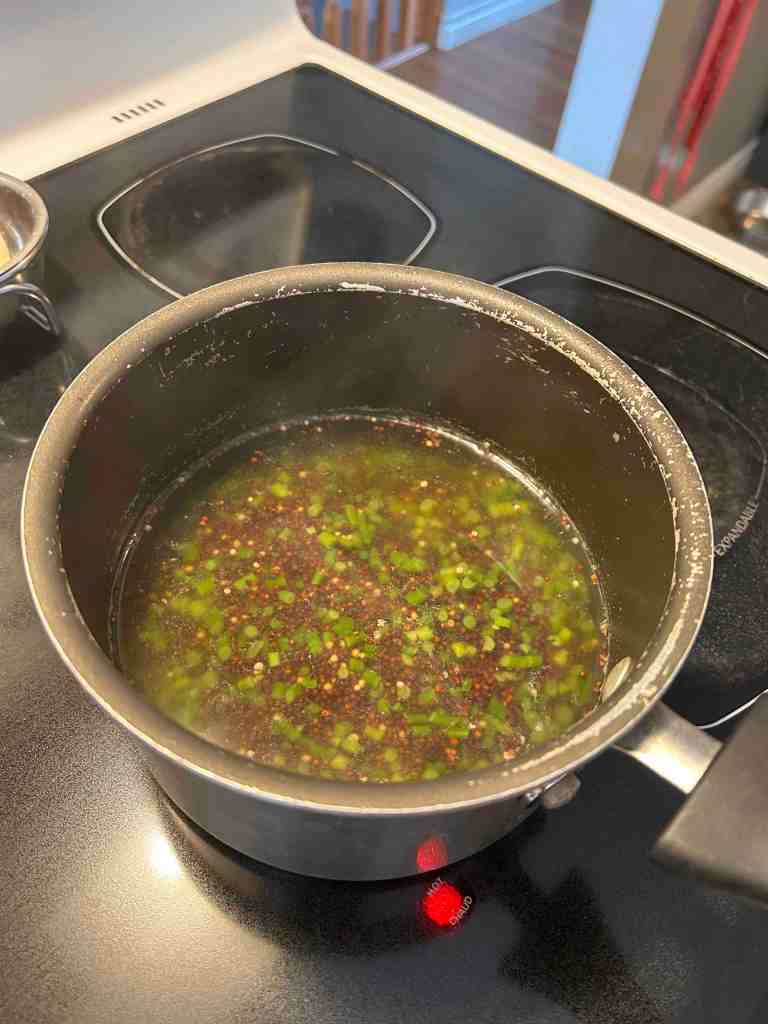
- Add chopped garlic scapes, water and some fresh ground pepper into a saucepan. Bring to a boil, then reduce and simmer for 15 minutes.
- Remove from heat and add the mustard seeds to the water. Cover and let sit in the pot for a minimum of 2 hours or overnight (don’t refrigerate). The seeds should absorb most of the water.
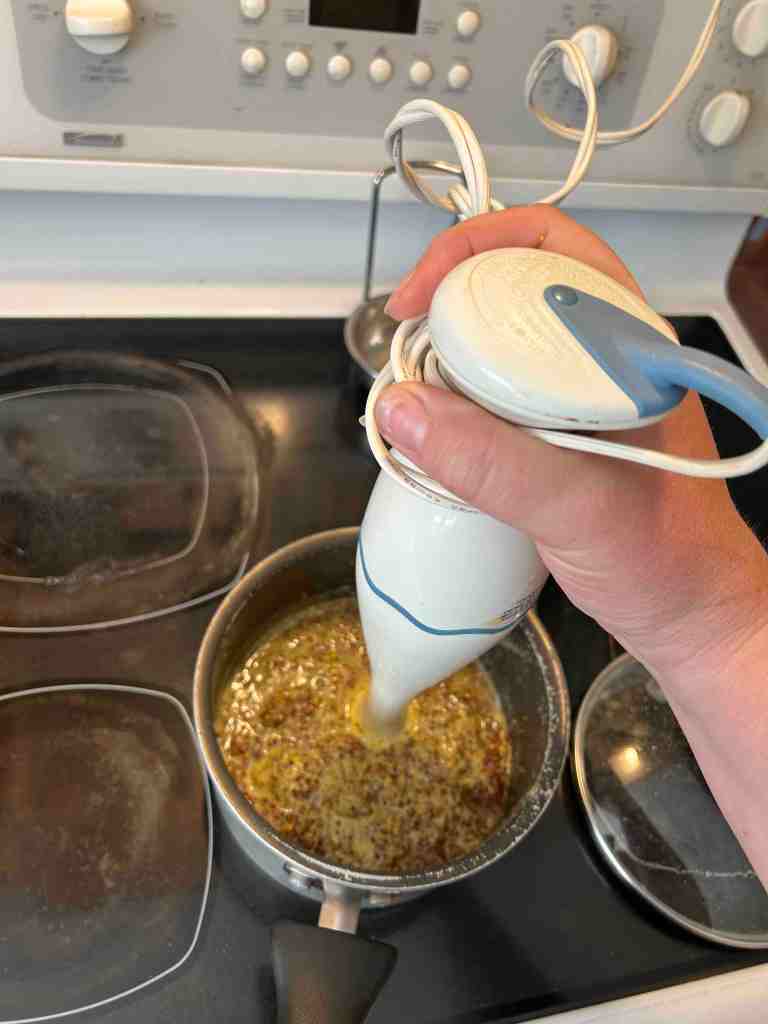
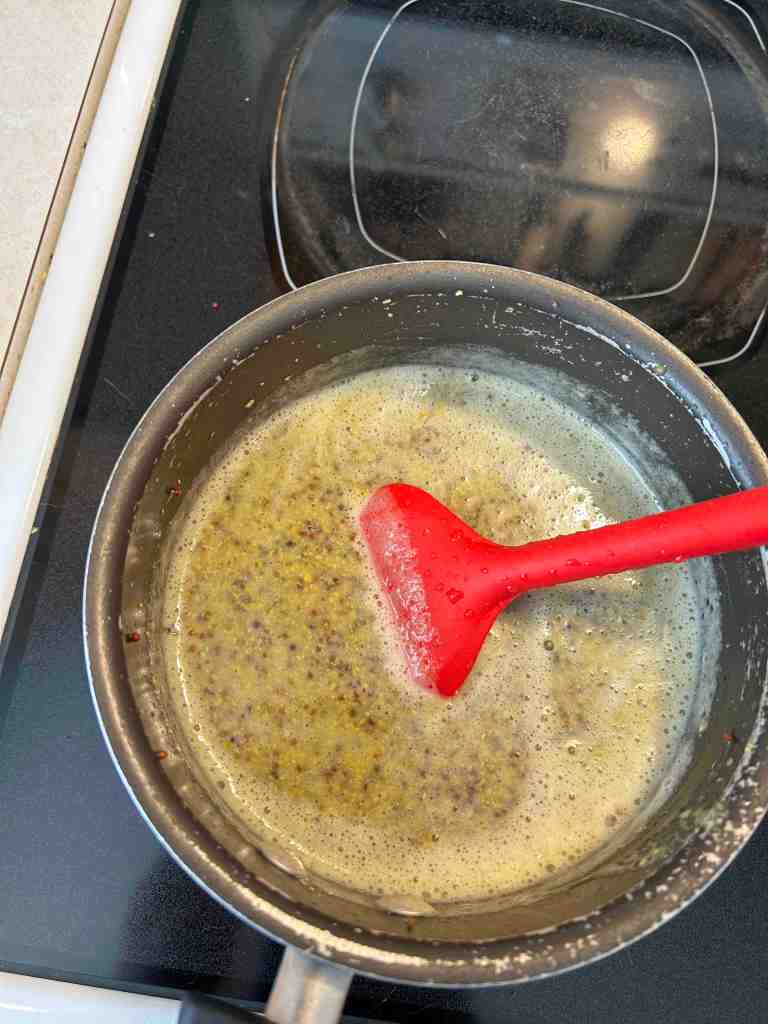
- Using an immersion blender, blend the mustard seed & garlic scape mixture until you have a watery paste. It will thicken as you blend, but shouldn’t become a true paste.
*Note: you can use whatever blender you prefer, but I found that my food processor and blender didn’t do a great job of chopping the seeds to the consistency I wanted. The immersion blender did a great job. Another alternative, is that you can use a grinder to chop up the seeds while they are still dry, prior to adding them to the water. This will save you this step. - Add the vinegar to the paste. Whisk in the dry mustard, sugar and honey. If your mustard looks a little to watery, you can simmer it to reduce the liquids, however remember, that the mustard will still naturally thicken a bit more over the next few days.
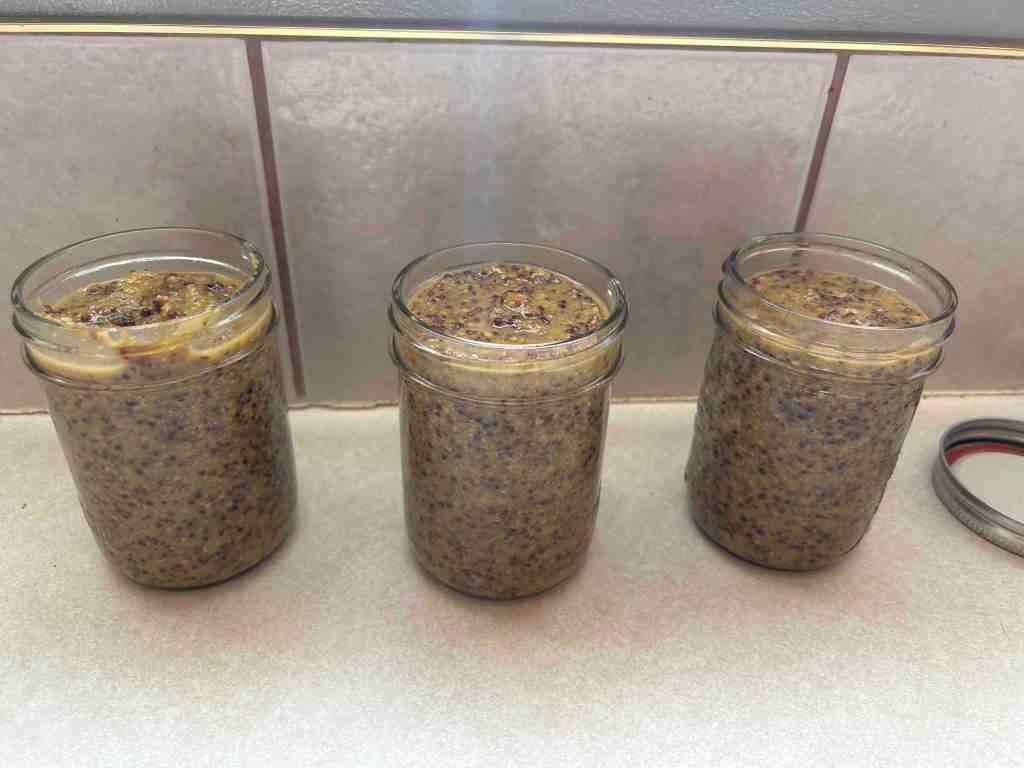
- Pour into jars and either can it for longer storage, or let it cool then cover and put in the fridge. Mustard is naturally anti-microbial and with the addition of vinegar, mustards can last a long time so regardless of how you store it, you will likely eat it all long before it would be time to toss it.
- LEAVE IT ALONE FOR AT LEAST 2-3 DAYS. Mustard is naturally bitter to begin with and needs a few days to mellow out. This was a learning curve for me as one of the recipes I looked at said it would be good to eat right away and the other didn’t note how long to leave it for. It was bitter and disappointing at first taste. But has gotten better now that a few days have passed with the flavour mellowing and becoming quite enjoyable.
Directions in Photos

Chit Chat Bit
I jumped right into mustard making and perhaps should have done a little more reading before getting into it. Mustard truly is a very simple condiment to make. But now that I have done a little more digging, mostly to determine why my mustard had a hint of bitterness those first few days, I have learned so much more.
I definitely plan on trying a few different methods and flavours. My next batch, I am going to try crushing the seeds first to see if there is a difference in flavour. A few sites noted that soaking the full seeds sometimes gives a more robust flavour, but then so many recipes pre-shop the seeds. It sounds like for most, it is because the seeds can be a pain to chop once soaked….which I certainly found out the hard way. If the immersion blender hadn’t worked, then I would have gone to a mortar and pestle.
I also want to try playing with some of the flavours. Though this mustard has a hint of sweetness, I would like to do a sweeter mustard. I also have read quite a few recipes that have experimented with adding other herbs into the mustard. I like the idea of trying this to add more flavour to the finished product. Some articles also note the differences in some cultures mustards such as bavaria never using honey and only sugar (I love bavarian mustards), and italian mustards often adding some sort of fruit juice. Beer can also be used in the soaking process to add flavour. And so on.
Now that I know how easy it is, I imagine that I will be making mustard a lot more often. My family will likely benefit as I will share because I can’t possible eat all of the mustard that I will make, though I can certainly try! I may even need to do some research to see about growing our own mustard seeds.

 JK Building The Dream
Inspiring. A great way to utilize garlic scapes. I look forward to trying this.
LikeLike
I hope you enjoy it! I’ll be making another batch of this once the rest of my scapes are ready.
LikeLike
I made this last year and I was disappointed I didn’t make more it was so damn good! I gave away some as gifts and everyone loved it. I will be making a lot more this year.
I process mine in a water bath to give it a longer shelf life.
LikeLiked by 1 person
I’m so glad both you and everyone you gifted it to loved it. I will also be making another batch of it soon.
LikeLike